
Back-to-School Eyes: Why a Children's Eye Test is a Must
Back-to-school season is the perfect natural checkpoint for the whole family's eye health. Whether it's your child's first eye test or a routine check-up, catching vision changes early makes all the difference for school performance, visual comfort, and confidence in the year ahead.
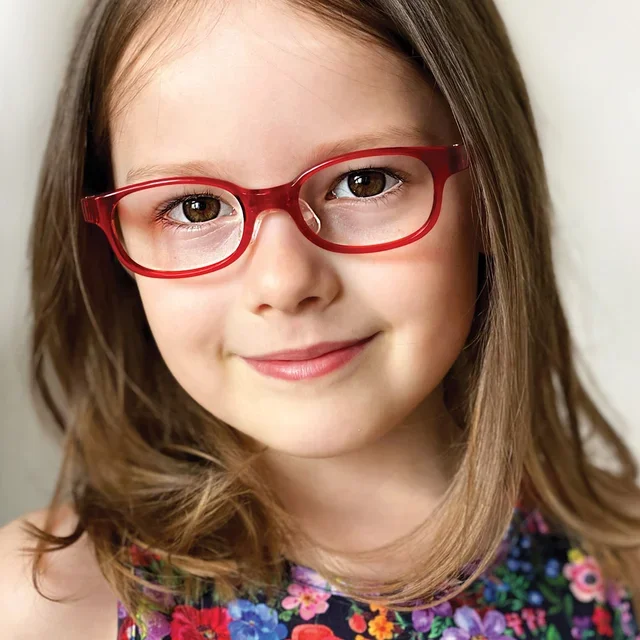
Getting Ready for the New Term
In a lot of households, August means: the great back-to-school scramble. There's the annual ‘how did they grow three shoe sizes over summer’ moment, the hunt for a PE kit that hasn't mysteriously vanished, and the ritual restocking of stationery to whatever exact specification the school and your child have decided is non-negotiable. New shoes, new backpack, but children's eyesight is often the thing that gets overlooked, simply because it's so easy to miss. A child doesn't know what ‘normal’ vision looks like, so if theirs isn't quite right, they usually have no idea anything is wrong at all.
Why Children Rarely Notice Vision Problems
Children often assume everyone sees the way they do. If the board at school looks slightly blurred, or reading leaves their eyes tired, that's simply ‘how it is’ for them - they have nothing to compare it to. On top of that, young children are remarkably good at adapting: sitting closer to the TV or at the front of the classroom, holding books closer or further away, or squinting to bring things into focus, all without realising they're compensating for a problem. That's exactly why undetected vision issues can quietly affect concentration, reading progress, and even behaviour in the classroom, long before anyone suspects the eyes are the cause.
Signs Parents Can Watch For
Here are some of the clues to keep an eye out for:
Sitting close to the TV or holding books close to the face
Squinting or frowning to see objects, such as the whiteboard
Frequent eye rubbing or excessive blinking
Complaints of headaches or tired eyes after school or reading
Losing their place while reading, or avoiding reading altogether
One eye appearing to turn in or out, even occasionally
None of these signs is a diagnosis on their own, and plenty have simple explanations, but if you notice one or more regularly, it's worth booking a full eye examination.
A Full Eye Exam Covers More Than a Reading Chart
A children's eye examination isn't just about reading letters off a chart. It looks at how well the eyes focus and work together, checks for any signs of squint or ‘lazy eye’ (amblyopia), and assesses overall eye health - all in a way that's designed to be quick, comfortable, and even a little fun for younger patients. Many childhood vision problems respond very well to early treatment. Some, like amblyopia, can be successfully treated if caught early enough, while others, like myopia, can be well managed with the right glasses and contact lenses. That's exactly why routine checks matter, even when a child hasn't complained of anything at all.
Myopia: A Growing Concern for School-Age Children
One of the most common changes we look for in children is myopia, or short-sightedness, in which distant objects appear blurred while close-up vision remains clear. Myopia usually first appears before the age of 10 and tends to progress gradually through childhood and the teenage years, typically stabilising in the late teens or early twenties. It's also becoming far more common, with myopia rates in children rising steadily worldwide, which is why it's attracted increasing attention from eye care professionals in recent years.
It's easy to think of myopia as simply ‘needing glasses,’ but there's more to it than that. As a child's eyes become more myopic, the eye itself grows longer than it should, stretching the retina. Standard glasses or contact lenses correct the blur, but they don't influence that underlying growth. This matters because higher levels of myopia are linked to a greater lifetime risk of certain eye conditions in adulthood, such as retinal detachment, cataracts and macular degeneration. Even mild myopia carries an increased risk compared with not being short-sighted at all. This is where myopia management comes in.
Rather than just correcting blurred vision, myopia control (or myopia management) uses specially designed spectacle lenses (glasses), soft contact lenses, orthokeratology, and/or atropine eye drops to slow the progression rate, resulting in a lower final prescription. This means better everyday vision for your child, and a lower long-term risk of certain eye health issues in adulthood associated with higher levels of myopia. Everyday habits play a part too: time spent outdoors, regular breaks from screens, and keeping them farther from your face are known to reduce the risk of myopia onset and progression.
It won't be the right path for every child, but for children with myopia and those showing early signs, it's a conversation worth having with your optometrist. You can find out more about the options we offer on our Myopia Management page.
Don't Forget Your Own Eyes
While you're organising the back-to-school checklist, it's worth adding your own name to it. Parents are often so focused on their children's needs that their own eye health slips down the priority list, yet adult vision changes are just as easy to miss day-to-day and just as important to catch early. Booking a family appointment means everyone starts the new term seeing clearly and with their eye health looked after, and it's one less thing to think about once term begins.
Frequently Asked Questions
-
Children should have their first eye examination if there are any concerns about their vision or a family history of eye conditions. Many children have their first routine eye test before starting school, helping ensure they're ready for classroom learning.
-
Most school-age children benefit from an eye examination every one to two years. However, your optometrist may recommend more frequent visits depending on your child's prescription, eye health or family history.
-
Yes. Many children don't realise they have a vision problem because they've never experienced clear vision to compare it with. Regular eye examinations often detect issues before they begin affecting school performance.
-
Yes. Depending on their age, prescription and lifestyle, many children and teenagers are suitable candidates for contact lenses. They can be particularly beneficial for sport, active lifestyles and, in some cases, myopia management.
-
Yes. In the UK, NHS-funded eye tests are available for eligible children under 16 and for those under 19 who are in full-time education.
-
Myopia management is a range of treatments designed to slow the progression of short-sightedness in children. It can include specially designed spectacle lenses, contact lenses, orthokeratology and, where appropriate, medicated eye drops.
-
Back-to-school is the ideal reminder to prioritise your family's eye health.
Whether your child is starting school for the first time or returning for another busy year of learning, a comprehensive children's eye test can help ensure they're seeing clearly and performing at their best.
At Arthur Hayes Opticians, we're here to support every stage of your family's eye care journey—from children's eye examinations and myopia management to adult eye health and designer eyewear.
Book your child's eye test today and help them start the new school year with confidence.
Booking Link